A lot of people die every year by drinking contaminated water because in some parts of the world people do not have access to clean and purified water. Moreover by taking in account the current status of water pollution and the climate change, the condition will be even worse in upcoming years. Drinking purified water is highly important but the water bottles that contain purified water are costly, pollutes environment (since it’s a single use plastic) and are difficult to store and carry. Safe water interventions can transform the lives of millions, especially in crucial areas such as poverty eradication, improvement in quality of life and environment. A perfect solution to this is LifeStraw, which filters water by passing it through a bunch of long, hollow fibres encased in a plastic tube.
Who invented LifeStraw?
The idea was created by Torben Vestergaard Frandsen, but with time in partnership with various companies like Carter Center, Rob Fleuren from Holland and Moshe Frommer from Israel, the Lifestraw has emerged from the work designed to make water filters. It was used as an efficient tool for controlling Guinea Worm.
How does it look?
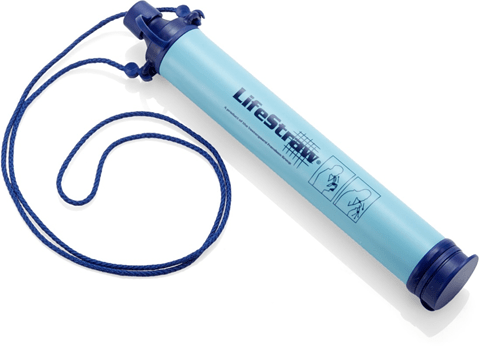
It has cylindrical shape having 25 cm length and 29 mm diameter and can be hung around the neck. It does not contain any spare parts or electricity supply for working.
How much purification?
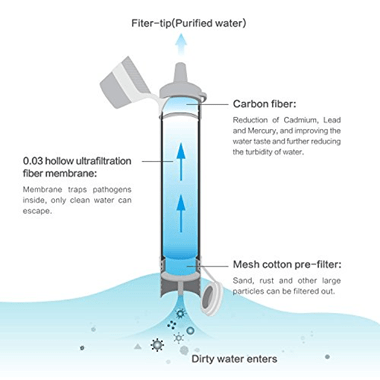
Anything larger than two microns can be removed from the water when it is filtered through LifeStraw. It can filter 99.9% of parasites and 99.9999% of bacteria, most of them cause diseases like cholera, dysentery and typhoid fever. One straw can purify nearly 4000 litres of water.
How it works?
LifeStraw contains PuroTech Disinfecting Resin (PDR) – a patented, extraordinarily effective material which kills bacteria. Presence of active carbon removes parasites.
How to use it?
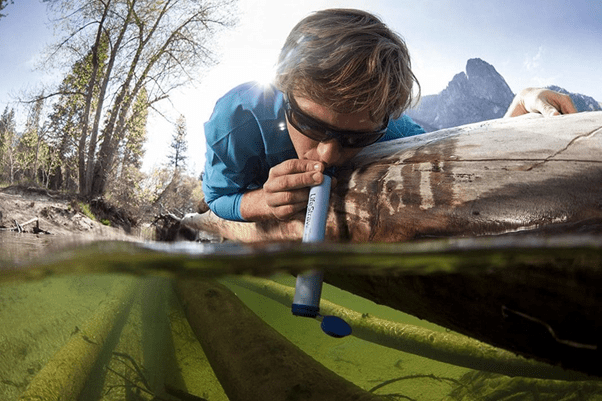
Suspend one end of LifeStraw in the water and from the other end suck water. People of any age who have capacity to suck water can use it.
How much it costs?
Although there are various manfacturers but it costs around 15-20 dollars each.
Shortcomings:
Although it efficiently removes pollutants from water but it does not remove heavy metals. Since the level of heavy metals in water bodies is rising, modifications need to be made in the straw. Moreover, people in developing countries cannot afford it and it is not available in common stores.
Based on the principle of Lifestraw, there is utmost need to develop cost- effective straw solutions so that people in developing countries can also use it that otherwise have no access to clean water. Such a product would save millions of lives.
 AGSC 5110 Research Methods