Hi friends! Here we will discuss about the applications of sound waves in improving the quality and extending the shelf life of food products. The frequency of these sound wave is above than the audible limit of human hearing.
Ultrasound are sound waves with a frequency ranging from 20 Khz to several GHz. It was first used in 1956 by prof. Lan Donald in Obstetrics. Later on, by optimizing the amplitude, frequency, pulsation, probe diameter and power level, scientists have explored and proved its application in agriculture, automobile industry, food processing and even it is used as sonic cutter with a frequency fixed at 40Khz and pulsation of around 40000 times per second. In the ultrasonic cutter, the piezoelectric element generates a force that resonates the whole body, from the transducer to the blade tip, generating a large vibration at the tip which impacts in a quick and precise cutting.
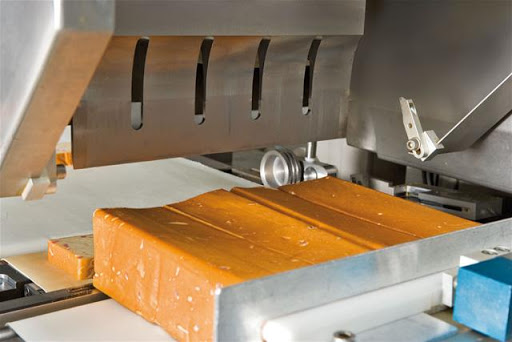
The basic principle behind this process is cavitation which is formed due to the successive compression and rarefaction cycle. When the sound wave propagates through a biological structure it induces compressions and depressions on the medium particles and a high amount of energy will be imparted. In dependence of this energy generated, frequency, the applied sound wave amplitude along with other process parameters, a number of physical, chemical and biochemical effects can be observed which opens door for a variety of applications in food industry, like pasteurization, homogenization, drying, crystallization, filtration, defoaming, meat tenderization and extraction of oil. Apart from the enzyme inactivation, this penetration property leads to rupturing of bacteria cell wall, proving its application as a preservation tool for microbial inactivation.
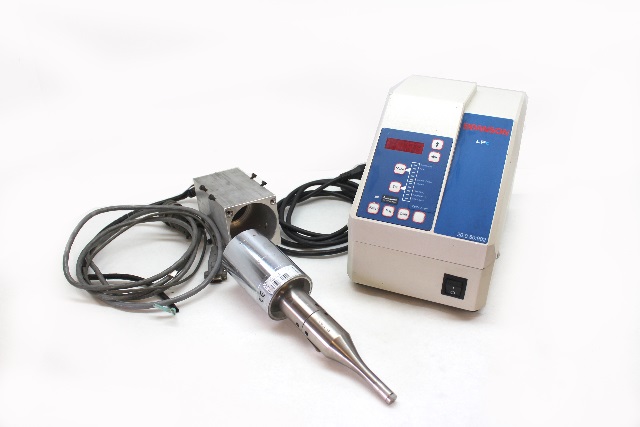
The novel ultrasound processing under optimized conditions and controlled temperature could be better alternative for heat preservation technique which ensures food safety by complete destruction of yeast, mould and coliform bacteria without affecting the nutritional and sensory property of food.
 AGSC 5110 Research Methods