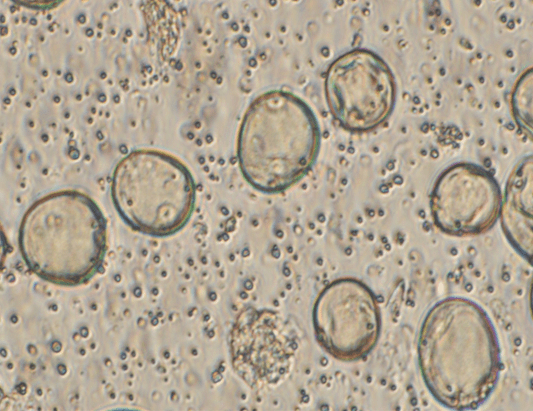
Mature male gametes (pollen) have sporophyte-derived exine layer that prevent any cellular DNA extractions for genetic analyses. Pollen are dispersed and spread by many different environmental factors, such as wind, water or animals. If the conditions are suitable the sporopollenin-impregnated walls of pollen grains and spores can persist in the fossil record for hundreds of millions of years, since sporopollenin is resistant to chemical degradation by organic and inorganic chemicals. Its inert composition allows for the maximum protection available for the pollen to survive in harsh conditions. A key step is to target correct micro-spore developmental stage in order access gametic DNA in plants, it is crucial to identify their cell wall development stages for circumventing hindrances rendered. For microspores’ isolation, sessile spikelets measuring approximately 3.3 – 3.7mm in length were dissected from panicles under a microscope to retrieve and macerate anthers Therefore, during microsporogenesis, it is best to isolate single cells immediately after the tetrad stage when the outer sporopollenin wall is not completely developed. Individual cell isolation can be achieved by using CellTram micro-injector mounted on an ultra fine move Marzhauser (HS6) micro-manipulator (ALA Scientific Instrument, Westbury, NY).
 AGSC 5110 Research Methods