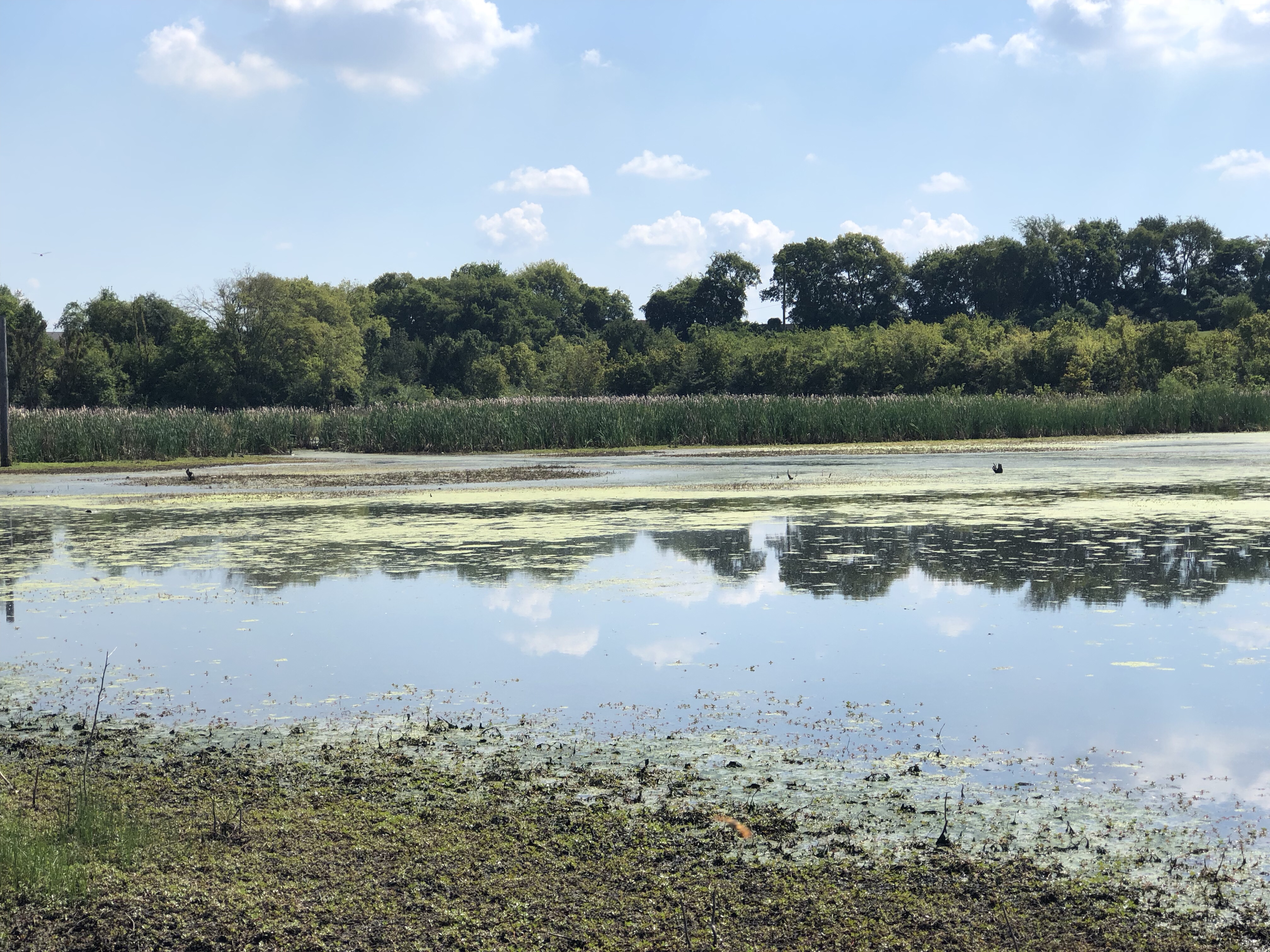
If you have been to the TSU research farm or even taken the back road from the Barn, then you have more than likely seen the wetland that our campus was blessed to have free access to. Sometime it’ll be dry, other times it’ll look like a little pond. When there is water present you more than likely will see greenish material floating in the surface. It can be duckweed or other green algae. However there has been test to see if our wetland contains Harmful Algae Blooms (HABs).
Guess what? We got ‘em.
Harmful Algae Blooms occur when algae — simple photosynthetic organisms that live in the sea and freshwater — grow out of control while producing toxic or harmful effects on people, fish, shellfish, marine mammals, and birds (NOAA). What causes these conditions are various and can depend on the area the body of water is located.
Harmful algal blooms need; sunlight, slow moving water, and nutrients (nitrogen and phosphorus).
HABs can; produce toxins that can be fatal to people and animals, make dead zones, create water quality issues, increase water cost, and can harm businesses that depend on tourism or other water resources and more.
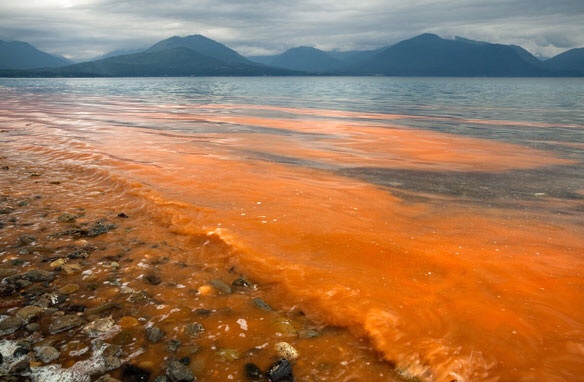
There are many cases were beaches had to shut down due to HABs. If you have heard of Red Tide that is an example of how HABs can look.
In our wetland’s case, why do you think we have HABs present?
 AGSC 5110 Research Methods